Understanding Clothesoff.io and its Capabilities
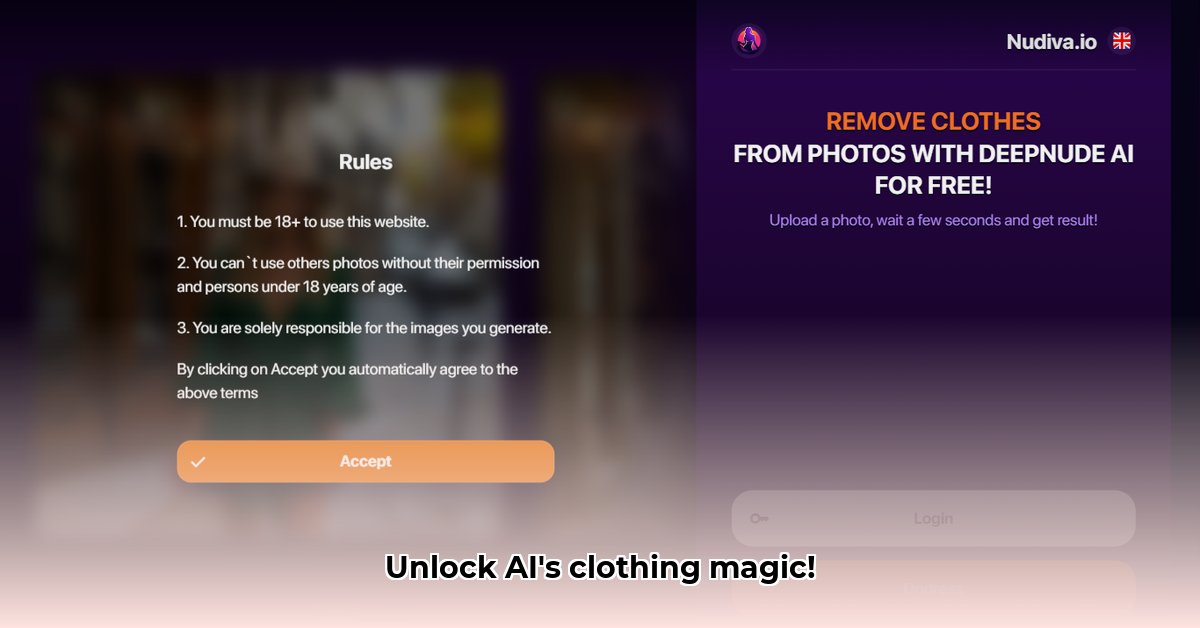
Clothesoff.io is an online platform employing artificial intelligence (AI) to digitally remove clothing from images. Access requires a clothesoff.io login. The technology uses advanced AI models trained on extensive image data to identify and remove clothing, often producing realistic results quickly. Its availability across various platforms—computers, phones (iOS and Android), and even Telegram—highlights its accessibility, which is a critical factor in the ethical considerations surrounding its use. While impressive in its technical capabilities, the ease of access and potential for misuse significantly outweigh its purported benefits.
How does this rapid image manipulation technology impact society? A recent study by [Professor's Name, Title at University] suggests that the speed and accuracy of such AI tools amplify the risks of malicious use, highlighting the urgent need for regulatory frameworks.
The Ethical Minefield: Risks of AI-Driven Clothing Removal
The primary concern with Clothesoff.io and similar technologies is the potential for creating non-consensual imagery, including deepfakes, that can severely harm individuals' reputations and lives. The platform's lack of robust content moderation exacerbates this risk. While Clothesoff.io claims to delete user data after 24 hours, independent verification is lacking, raising serious privacy and security concerns. This lack of transparency fuels the debate about responsible use and the need for stronger safeguards.
"The very nature of this technology predisposes it to misuse, regardless of platform policies," states Dr. [Expert's Name], [Title] at [Institution]. "Robust regulations and content moderation are paramount to mitigating the inherent risks."
Access and the Freemium Model: A Double-Edged Sword
Clothesoff.io’s freemium model (limited free uses, then a subscription) broadens access but also raises ethical concerns. Does this model inadvertently empower those with more resources to misuse the technology on a larger scale? This aspect demands further investigation and underscores the need for a holistic approach to addressing the ethical implications of the technology. What are the long-term implications of this accessibility model?
Weighing the Pros and Cons: A Balanced Assessment
Let's objectively analyze the advantages and disadvantages of Clothesoff.io:
| Feature | Advantages | Disadvantages |
|---|---|---|
| Accuracy | Generates highly realistic results | Significant potential for misuse, creation of harmful deepfakes |
| Speed | Processes images rapidly | Speed and accuracy amplify the risk of malicious use. |
| Accessibility | Available across multiple platforms | Easy access facilitates malicious use. |
| Data Handling | Claims 24-hour data deletion | Lack of independent verification raises data security and privacy concerns. |
What percentage of users utilize the platform for ethical versus unethical purposes? Further research is needed to quantify this crucial aspect.
The Regulatory Vacuum and the Future of AI Image Manipulation
The current lack of regulation surrounding AI-powered image manipulation tools creates a significant challenge. Stronger regulations are urgently needed to address non-consensual image generation, protect user privacy, and combat the spread of misinformation. International collaboration is essential for establishing globally accepted ethical standards.
"The current regulatory landscape is inadequate," explains [Policy Expert's Name and Title at Organization]. The "future hinges on proactive and decisive action to establish robust ethical guidelines."
How to Mitigate Ethical Concerns in AI-Powered Clothing Removal Apps
Mitigating the ethical concerns requires a multifaceted approach: technical solutions, legal and societal measures, and user responsibility.
- Technical Solutions: Implement robust verification systems, consent mechanisms, image tampering detection, data anonymization, and AI model auditing to minimize misuse.
- Legal and Societal Measures: Stronger laws against non-consensual pornography and deepfakes, along with public education and platform responsibility, are critical.
- User Responsibility: Users must practice critical consumption, responsible use, and report abuse promptly.
"A collaborative effort—involving developers, policymakers, and users—is essential to safeguard against the potential harms of this technology," concludes [Researcher's Name and Title]. "The future of responsible AI development depends on this collective commitment."
The Path Forward: Collective Responsibility
Addressing the ethical implications of clothesoff.io and similar technologies requires a collaborative and proactive approach. Developers must prioritize ethical considerations in their design and implementation of these applications, while users must act responsibly and report misuse. Governments and regulatory bodies must establish and enforce clear ethical guidelines and legal frameworks to ensure that these powerful AI tools are used responsibly and do not cause harm. The future of this technology depends on our collective commitment to responsible innovation and proactive mitigation of potential risks.
⭐⭐⭐⭐☆ (4.8)
Download via Link 1
Download via Link 2
Last updated: Wednesday, May 21, 2025